Polarity and subjectivity
Classify mentions as positive, neutral, or negative while understanding how opinionated the content is.
Kommon Poll combines sentiment classification with topic, source, and mention-level context so teams can see not only whether conversation is positive or negative, but why.
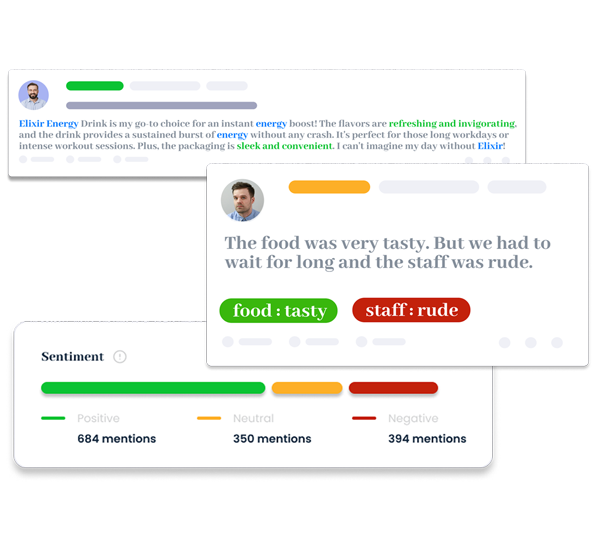
A single sentiment score does not tell the full story. Negative conversation may be caused by pricing, delivery, product quality, service experience, misinformation, or competitor comparisons. Positive sentiment may come from campaigns, customer stories, influencers, or product strengths.
Kommon Poll helps teams analyze sentiment with context. It links emotional tone to topics, platforms, authors, and specific mentions so teams can take action instead of simply watching a score move.
This supports reputation management, campaign evaluation, customer experience, product feedback, and competitor analysis.
Classify mentions as positive, neutral, or negative while understanding how opinionated the content is.
Track how sentiment changes over time and whether changes align with campaigns, issues, or competitor activity.
Compare sentiment across social, reviews, news, forums, app stores, and other sources.
Each workflow combines monitoring, filtering, AI interpretation, and reporting so the page is useful beyond a simple feature description.
Classify mentions as positive, neutral, or negative while understanding how opinionated the content is.
Track how sentiment changes over time and whether changes align with campaigns, issues, or competitor activity.
Compare sentiment across social, reviews, news, forums, app stores, and other sources.
Understand sentiment around specific themes such as service, price, quality, delivery, or product features.
Surface high-risk complaints, recurring issues, and posts that may need urgent review.
Measure how sentiment differs across products, locations, competitors, people, or campaigns.
Use these examples as starting points for configuring searches, alerts, dashboards, and reports around the outcomes your team needs.
Kommon Poll is designed to make public conversation easier to operationalize: define the scope, collect the signal, interpret the pattern, and share what matters.
Gather brand, competitor, campaign, product, and topic conversations.
Assign sentiment while linking each mention to themes, sources, languages, and entities.
Identify the topics or posts most responsible for positive and negative movement.
Escalate issues, amplify praise, adjust messaging, or brief stakeholders.
No automated sentiment model is perfect, especially with sarcasm, slang, and mixed-language posts. Kommon Poll uses AI and context to improve interpretation, but review is still important for high-stakes decisions.
Yes. Topic and aspect analysis helps reveal what is causing positive or negative sentiment.
Yes. Kommon Poll is designed for multilingual environments and can support sentiment analysis across supported languages and regional expressions.
Connect this page with adjacent workflows so users can understand the broader value of public conversation intelligence.
Use Kommon Poll to understand what people feel, why they feel it, and where your team should act.