
Subhead: A seven-minute daylight raid on the Apollo Gallery sparked a global wave of mentions, presidential statements, expert warnings, and a flood of “Lupin” comparisons. While France races to fix security gaps.
Background: What Happened (and Why It Matters)
On Sunday, October 19, 2025, four masked thieves used a mover’s hoist/basket lift to reach a second-floor window of the Galerie d’Apollon in the Louvre. They cut through glass, smashed display cases, and escaped on scooters with eight pieces of Napoleonic-era jewels all in roughly 4 to 8 minutes. One damaged crown linked to Empress Eugénie was later found near the scene. The museum closed for investigation while France ordered a national review of cultural-site security.
Big voices weighed in quickly. President Emmanuel Macron called it “an attack on our heritage”, pledging to recover the works and bring the perpetrators to justice. Ministers Rachida Dati (Culture) and Gérald Darmanin (Justice) acknowledged security lapses and vowed upgrades. Experts warned the first 24 to 48 hours are critical to recover jewels before stones are re-cut or metals melted.
Why it matters: Beyond the loss of irreplaceable artifacts, the robbery exposes long-running tensions between access (welcoming millions yearly) and protection in historic buildings with complex surveillance realities, now under renewed scrutiny.
The Digital Buzz: From Shock to Finger-Pointing to Myth-Making
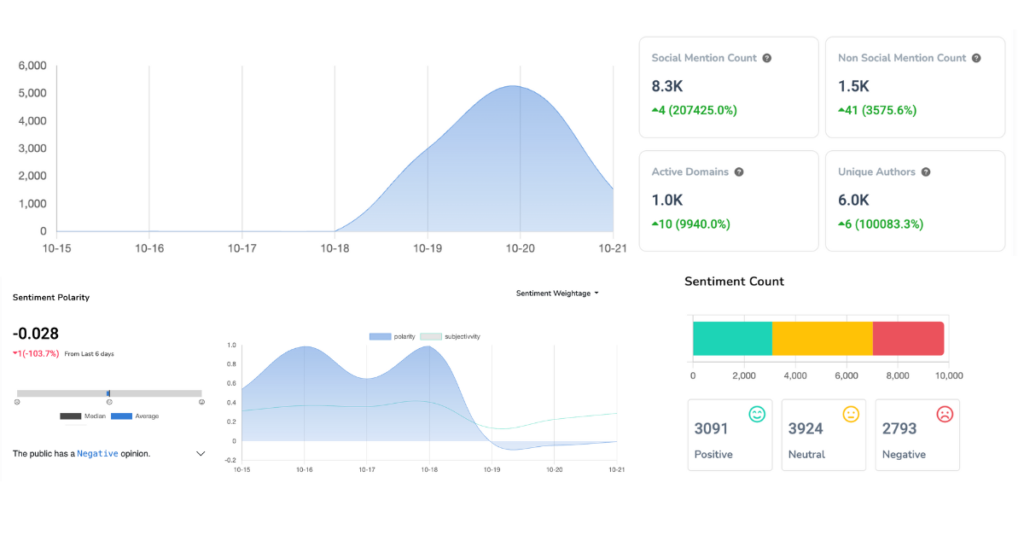
Within hours, the heist became a cross-platform phenomenon. Breaking-news posts, on-the-ground clips, and expert takes drove spiking mention volumes; by Day 2, discourse pivoted toward security failures, investigative leads, and what happens to stolen gems (melt/recut scenarios). Meanwhile, pop-culture seeped in: social feeds flooded with “Lupin IRL” jokes, side-by-side clip comparisons, and Arsène Lupin citations.
The Viral Photo Everyone’s Sharing (the ladder-elevator)
A widely circulated shot shows police standing by a furniture elevator/cherry picker parked along Quai François-Mitterrand, the same ladder/elevator route thieves used to reach the second-floor balcony of the Apollo Gallery in broad daylight. It’s become the defining image of the heist: simple, shocking, and instantly legible on social feeds.
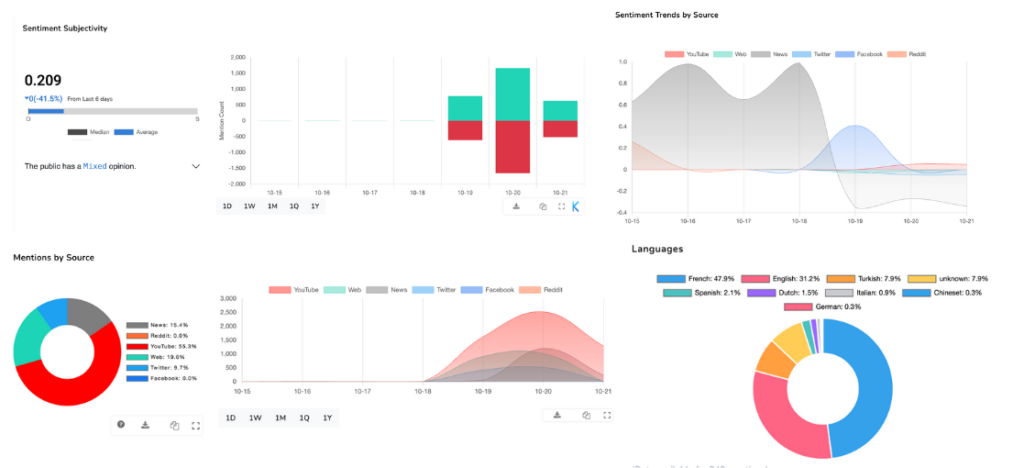
Kommon Poll Insight Blocks (drop your charts here)
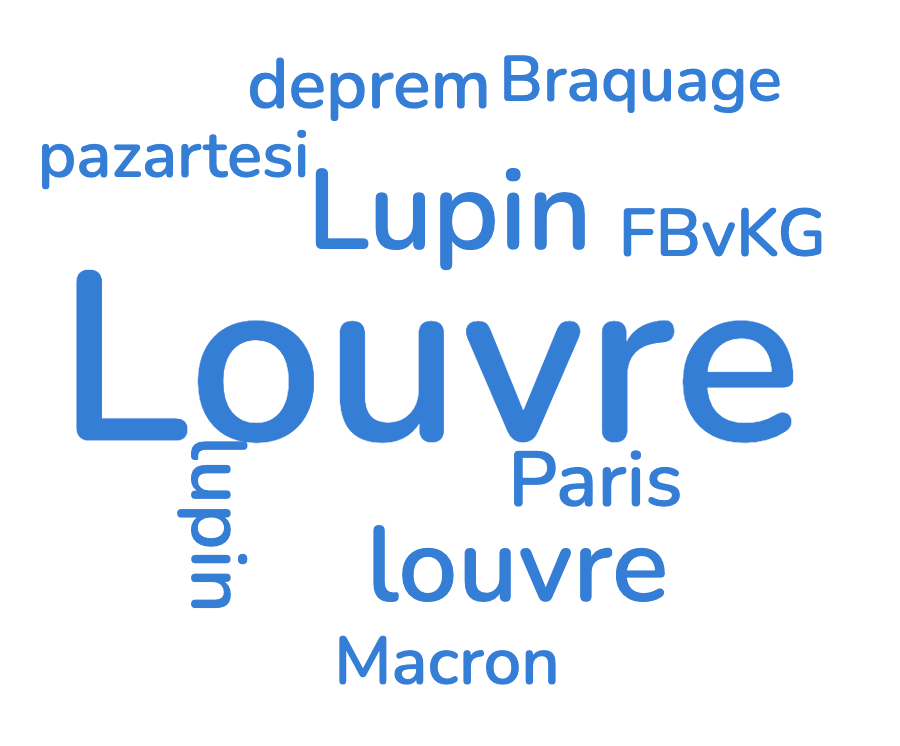
Hashtag Analysis
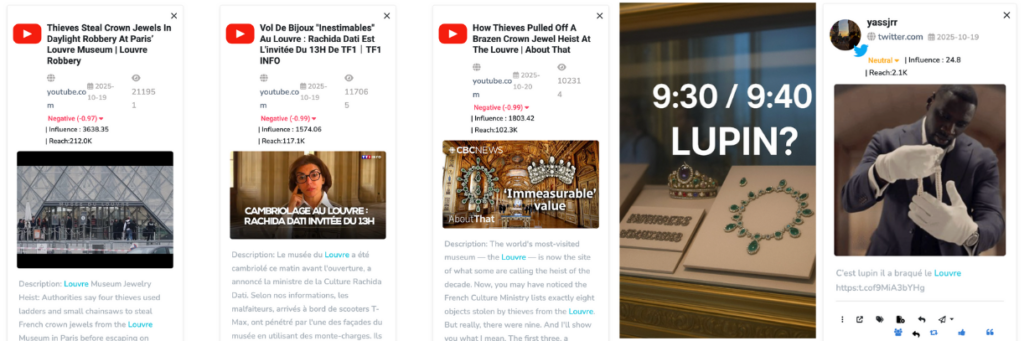
Mention Gallery (the posts that moved the convo)
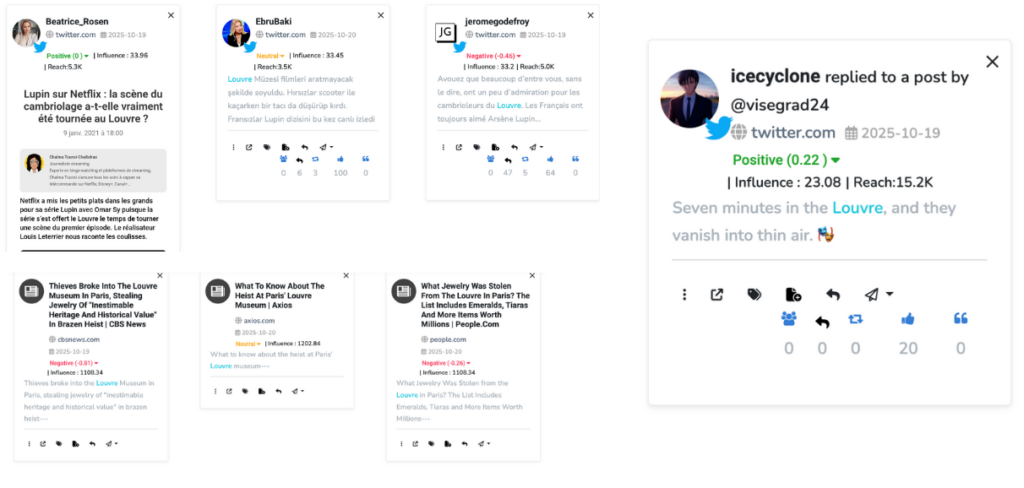
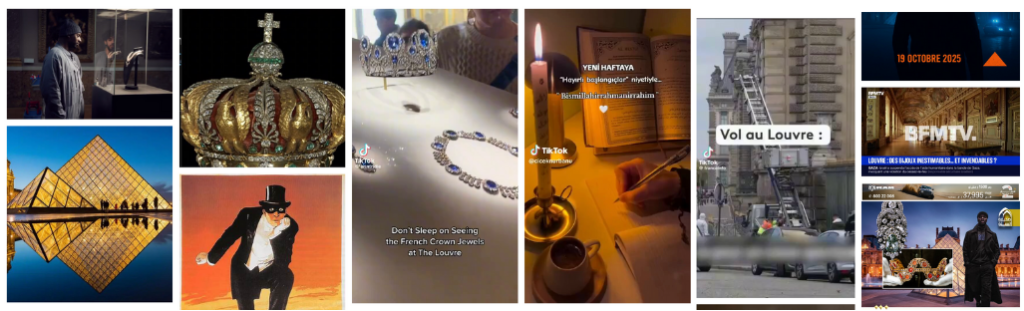
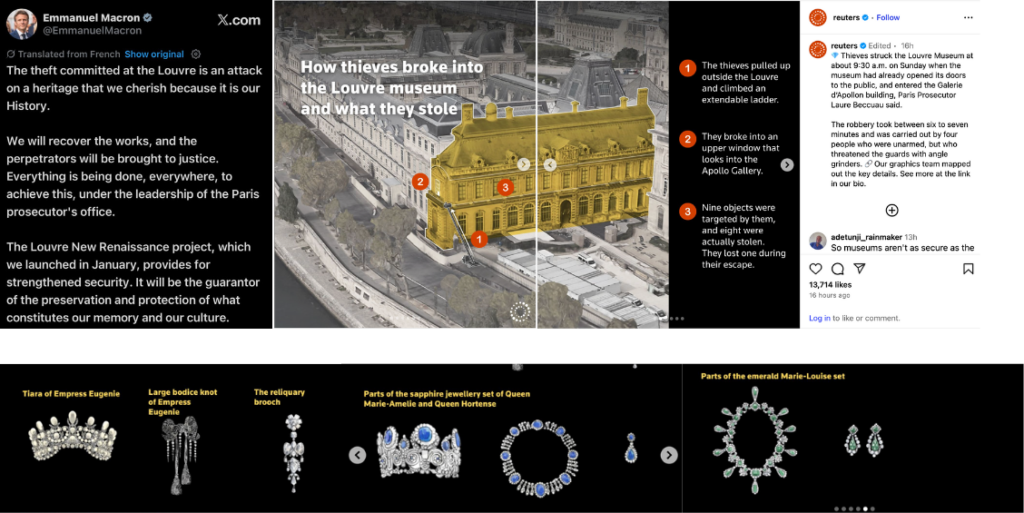
Deep Dive: Why Everyone’s Comparing It to Lupin
The heist’s imagery mover’s hoist, rapid display smash, clean exit, and the Louvre setting mapped perfectly onto the cultural memory of Netflix’s “Lupin” (Part 1 famously stages a Louvre necklace caper), itself inspired by Maurice Leblanc’s gentleman-thief Arsène Lupin.
Social media leaned into it: captions like “life imitates art,” split-screen edits, and trivia about the Louvre-shot pilot spread fast.

What the comparisons get right:
- Tempo & choreography: Quick in-out timing, coordinated roles, decoy/escape logic.
- Stagecraft: Using worker disguises/gear is classic Lupin misdirection.
- Iconic locale: The Louvre itself carries cinematic weight that accelerates meme-ability.
What they miss:
- Material economics: Real crews often destroy provenance (re-cut stones, melt settings) to liquidate value grim, not glamorous. Experts and police fear this outcome here.
- Lupin Part 1, Episode 1: the Louvre necklace setup and sleight-of-hand; museum interiors filmed on site; Arsène Lupin anagrams and detective callbacks useful for a small sidebar explainer next to your comparisons.
Security & Investigation: What We’re Seeing in Mentions
- Process critique: Camera coverage gaps, staffing constraints, modernization backlogs. France had already slated a €700m upgrade program through 2031.
- Manhunt vectors: Scooter getaway, A6 toward Lyon reports, forensics on abandoned tools/vehicle.
- Recovery odds: Police may catch the team, but intact recovery is hard if gems get split or metals melted, a recurring Europe-wide pattern.
What This Teaches (for comms, culture, and crisis)
- Narratives synchronize around strong symbols. “Louvre” + “crown jewels” ~ instant global cognition; add a pop-culture mirror (Lupin) and the story scales itself.
- The internet moves from shock → systems. After day one emotions, audiences seek mechanics (how it happened, how to prevent it). Meet that demand with credible explainers.
- Speed matters for outcomes. Recovery odds fall dramatically after day two message discipline and cross-agency updates shape public trust.
What Kommon Poll Captures (and how teams should use it)
- Real-time spikes with anomaly detection around official briefings and new footage.
- Topic-level sentiment separating security criticism from investigative confidence and Lupin meme-traffic.
- Hashtag/keyword pivots as discourse shifts from shock to solutions.
- Geo/language insights informing multilingual statements and media routing.
- Share of voice vs. concurrent news to forecast continued coverage windows.
Close & CTA
The Louvre heist is more than a crime story; it’s a stress test for how we protect shared heritage in a social-media age that amplifies symbols and scripts (from newsrooms to Lupin). The conversation will keep evolving as the investigation advances. The opportunity for institutions: listen in real time, explain the mechanics, and show the fixes. Track cultural flashpoints before they define you.
Try Kommon Poll for real-time insight alerts, dashboards, and multilingual intel your team can act on.